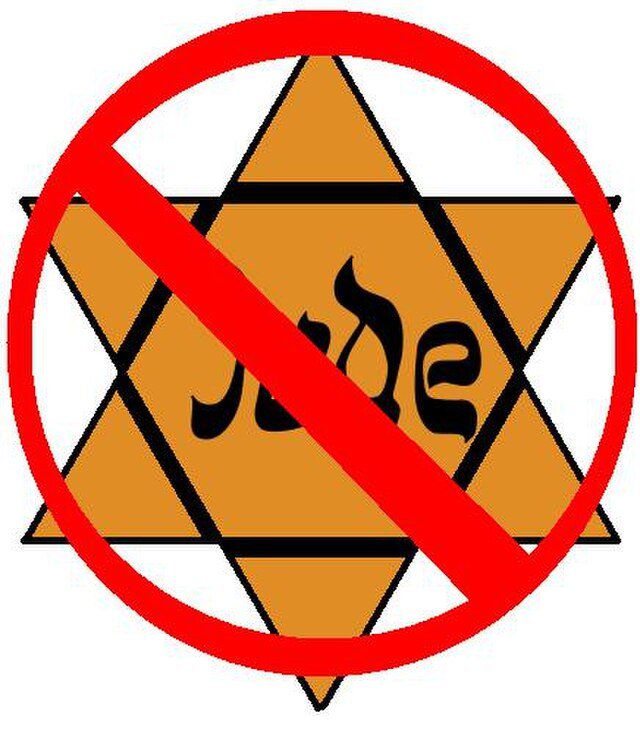
This week marked the observance of Jewish Remembrance Day, Yom HaShoah – the day on which we are reminded of the 6 million Jewish men women and children who died in the Holocaust. It stands as a stark reminder of human depravity at the very time Western democracies are seeing a serious resurgence in what seemed almost impossible a decade or two ago – antisemitism. Universities and other institutions of learning are seedbeds nurturing an invasive and poisonous mindset. Even Churches and Church leaders are captured in a growing zeitgeist. How do we account for this rise in bigotry and discrimination based on ethnicity, and is it merely a social phenomenon, or are deeper dynamics at play?
A recent article[i] in the Wall Street Journal by a prominent psychotherapist offers an insightful psycho-social analysis of marches and rallies in the USA which could equally apply to Britian and other western democracies. These rallies, he says, act like a type of group therapy, but they do not bring resolution, they close participants off to other points of view and transform ordinary political conflict into something more morally absolute – as a struggle between innocent victims and wicked victimisers.
They reflect a shift in the culture at large –
In my work as a psychotherapist, I’ve seen a parallel change in how people interpret their personal lives. Feelings are increasingly treated not as signals to examine but as conclusions to affirm. Discomfort is no longer something to work through but something to explain—often by projecting blame onto an external source. This mindset doesn’t stay in the therapy room. It has begun to shape political life, and the No Kings rallies offer a framework that favors affirmation over scrutiny: a clean moral narrative in which there are those who are wronged, and those responsible for the wrongdoing.[ii]
Here the influence of woke ideology on culture with its neat division of society into victimisers and victims has provided fertile soil for the demonisation of one group – and the consequent scapegoating of that group.
In a similar manner, hate marches against Israel in London and other capitals support the depraved Islamist rulers of Iran and their proxies who have murdered innocent civilians in tens of thousands, and coalesce around slogans such as “death, death, to the IDF” or “from the river to the sea”.
Alpert notes how pervasive the pattern is, and how anti-establishment symbols are raised to rally around.
The pattern extends beyond protests. In some corners of the culture, people who have committed or have been accused of violence—such as Luigi Mangione (who has pleaded not guilty to charges of murdering health-insurance executive Brian Thompson)—have been recast as antiestablishment symbols, valued less for their actions than for what they appear to represent. The details differ, but the impulse is the same: a search for villains who make anger feel justified.[iii]
Anti-establishment symbols are paraded in London rallies. Flags bear the image of the Ayatollah (who led the war against Iran for 8 years, 1 million dead, 200 000 child soldiers sent to their deaths; violently suppressed various women’s protests through shootings torture and rape; 30 000 political prisoners summarily executed, not to mention the 30 000+ civilians murdered in the last uprising).
Perhaps these are the same crowd dynamics we see at the trial of Jesus, as Pilate puts a choice before the people outside his palace. They bay for Jesus to be crucified and choose to support Barabbas in a kind of perverse inversion of morality. Fed with lies by the elite leaders of the religious system, they chose to go with emotion rather than truth.
Alpert has also noted within the culture a broader shift toward therapeutic language, in which emotional experience is elevated, validated and often treated as a kind of truth in itself.[iv]
He further notes another aspect of these contemporary marches and rallies:
These gatherings offer not only political expression but psychological alignment—a sense of being among others who see the world the same way. The effect can be energizing but also insulating, as politics organized around shared feeling begins to drift away from shared fact. The atmosphere often reflects this shift. Many rallies have taken on a performative, even theatrical quality, with costumes and exaggerated symbolism…[v]
Rallies, such as the Nuremburg Rallies in Germany capitalised on these psychological dynamics as a powerful tool in solidifying popular support and commitment to Nazi policy and goals. Indeed, we may find some answers to our questions regarding the way antisemitism rises by looking at the Europe of the 1930’s.
Germany was not the only place where this was happening – Russia had seen a wave of violent pogroms starting in 1881 causing widespread death and destruction, the last one occurring during the 1917-1921 civil war. The Austrian writer, Dietrich Von Hildebrand, one of the most fearless critics of Nazi ideology, in his memoirs[vi] from the 1920’s and 30’s, observed the self-deception among the populace – including Christians. He concluded that truth was no longer a foundation for behaviour. He described how his fellow citizens had become numb before moral evil – especially as he watched the rising antisemitism and the increasing isolation of the Jews.
Perhaps the most famous of resistance theologians, Dietrich Boenhoffer, spent much time contemplating the way in which ordinary fellow citizens in 1930’s Germany were swept up in antisemitism. Not only in the culture at large, but whole church denominations were captured by an irrational tide of feeling against Jewish people. Government controlled public media such as newspapers and radio, and propaganda films, vilified and demonised Jewish people.
He penned his thoughts on the matter in Letters and Papers from Prison[vii], in which he sets out his answer to the question: How do intelligent people become instruments of evil? He frames his answer in terms of two biblical categories – Wisdom and Folly.
He noted how in his experience, engaging rationally with those whom he classed as ‘fools’ was almost impossible as they become captive to a group mentality, psychologically blinded to rationality and reason.
The fool can often be stubborn, but that must not mislead us into thinking he is independent. One feels somehow, especially in conversation with him, that it is impossible to talk to the man himself, to talk to him personally. Instead, one is confronted with a series of slogans, watchwords and the like which have acquired power over him. He is under a curse, he is blinded, his very humanity is prostituted and exploited. Once he has surrendered his will and become a mere tool, there are no lengths of evil to which the fool will not go, yet all the time he is unable to see that it is evil. Here lies the danger of a diabolical exploitation of humanity, which can do irreparable damage to the human character.[viii]
In essence, it is a surrender of the will, and catastrophic damage may be the result both to the person and the community at large. Self-deception becomes the fruit of a larger movement of deception. He, like Alpert saw that deception was both an internal psychological dynamic that fed into and was supported by a wider sociological phenomenon
On closer inspection it would seem that any violent revolution, whether political or religious, produces an outburst of folly in a large part of mankind. Indeed it would seem to be almost a law of psychology and sociology. The power of the one needs the folly of the other. It is not that certain aptitudes of men, intellectual aptitudes become stunted or destroyed. Rather, the upsurge of power is so terrific, that it deprives men of an independent judgement, and they give up trying-more or less unconsciously – to assess the new state of affairs for themselves.[ix]
Ultimately, he concluded that there was only one remedy for this type of folly,
But it is just at this point that we realise the fool cannot be saved by education. What he needs is redemption. There is nothing else for it. Until then there is no earthly good trying to convince him by rational argument…. As the bible says, ‘the fear of the Lord is the beginning of wisdom’. In other words, the only cure for folly is spiritual redemption, for that alone can enable a man to live responsibly before God.[x]
Bonhoeffer is clear – antisemitism is more than a bigotry or racial prejudice, it is a virulent spiritual sickness, and only a spiritual remedy will help. There is an urgent need for Christians to stand firmly and vocally against this evil as well as praying for the intervention of the Holy Spirit in the life of their communities.
Psalm 12 may be of help here. Amid a tide of lies (and the modern version – propaganda) and a lack of truth in the public square, the Psalmist laments.
Save, O Lord for the godly one is gone;
for the faithful have vanished from among the children of man.
Everyone utters lies to his neighbour;
With flattering lips and double heart they speak.
He affirms the centrality of God’s word in orienting a person to reality and truth amid lies and propaganda –
The words of the Lord are pure words…
Despite the flood of deceptive and manipulative lies, he yet holds out hope in the faithfulness of God in the situation –
You, O Lord will keep them; you will guard us from this generation forever.
On every side the wicked prowl as vileness is exalted among the children of men.
__________________________________________________________________________________
[i] https://www.wsj.com/opinion/no-kings-politics-as-bad-group-therapy-df3778ff
[ii] Ibid.
[iii] Ibid.
[iv] Ibid.
[v] Ibid.
[vi] My Battle Against Hitler: Defiance in the Shadow of the Third Reich, Dietrich von Hildebrand, tr. John Henry Crosby. Penguin Random House, New York, 2014.
[vii] Letters and Papers from Prison, Dietrich Boenhoffer, Ed Eberhard Bethge, 1979, SCM, p8,9.
[viii] Ibid.
[ix] Ibid.
[x] Ibid.