[Abuja, Nigeria] Anglican leaders must reclaim the spiritual heritage of Augustine and Tertullian as a living testament to God’s power to revive dry bones through gospel grace alone, the Rt. Rev. John Ashley Null, the Anglican Bishop of North Africa,told the G26 Conference on March 5, 2026. Delivering his address at the G26 Mini-Conference in Abuja, Nigeria, Dr Null wove North African patristic theology with Reformation insights to challenge over 400 orthodox bishops and delegates from 34 countries. Speaking amid GAFCON’s push for a reordered Communion, he urged fidelity to scriptural authority in an era of revisionism. in the ninth of twelve talks given at G26 on the theme of the “Road to Recovery”.
The G26 gathering, hosted by the Church of Nigeria from March 3-6, convened 347 bishops alongside 121 lay and clerical delegates during a time of profound global Anglican realignments. Organized by GAFCON, the event centered on prayerful discernment, culminating in the Abuja Affirmation’s recommitment to the Bible’s supreme authority. Dr. Null’s presentation on day three fit seamlessly into the theological plenaries, where speakers unpacked orthodoxy’s ancient roots against waves of contemporary revisionism. His dual role as a preeminent Cranmer scholar and North African bishop gave his words singular authority, forging vital connections between early church history and today’s trials.
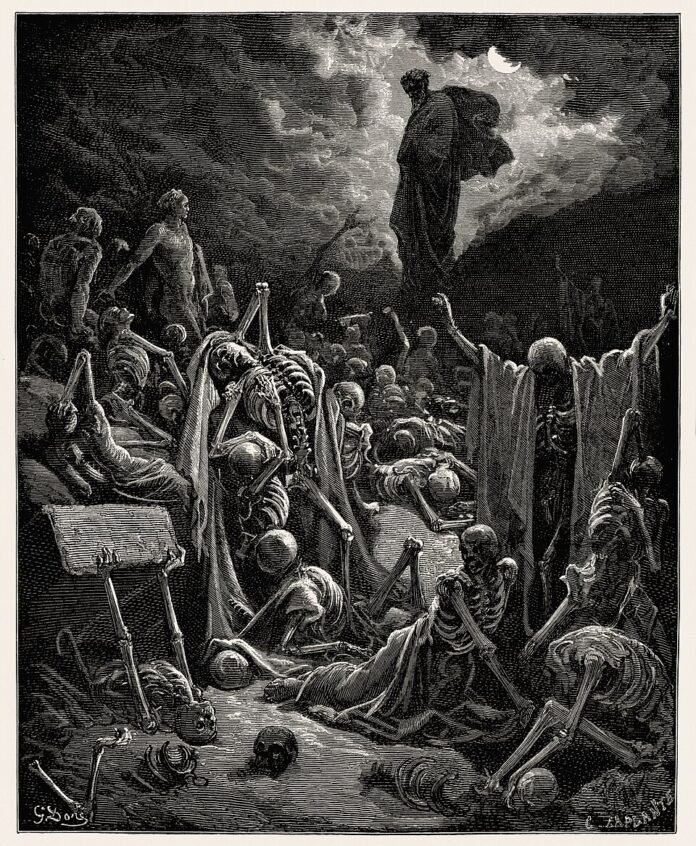
Dr Null rooted his message in Ezekiel 37’s haunting vision of dry bones, posing the prophet’s question: “Can these dry bones live again?” He mapped this imagery onto North Africa’s Christian story—a region once teeming with giants like Augustine and Tertullian, now a sparse minority amid centuries of dormancy. As bishop, Dr. Null presented Anglican ministry there as vivid proof of God’s repurposing might: broken lives, like the olive-wood shepherd’s crook he held from the Atlas Mountains, redeemed for eternal service. This theme mirrored core Reformation soteriology, where human incapacity yields only to unmerited divine grace.
North African fathers, Dr. Null demonstrated, profoundly shaped the 16th-century Reformers’ gospel recovery. Augustine’s *Confessions* illuminated Thomas Cranmer’s eucharistic theology, while Tertullian’s Trinitarian precision sharpened Lutheran sacramental debates. These ancient debts, he contended, bind today’s Anglicans to revive that legacy amid rampant gospel confusion. Augustine’s doctrine of original sin—human will enslaved to self-love—bolstered Luther’s simul iustus et peccator, the believer as simultaneously justified and sinner. Cranmer echoed Cyprian’s ecclesiology by exalting Word and sacrament above mere institutional power. Augustine’s cry in *De Trinitate*—that humanity grasps God only through Christ’s self-revelation—strikes at the heart of performance-driven religion, a trap Dr. Null sees ensnaring liberal Anglican drifts into moralism. “The gospel antidotes identity rooted in achievement,” he proclaimed, echoing a refrain from his chaplaincy days.
Dr. Null called G26 delegates to mirror Paul’s Corinthian witness: Christ crucified as divine wisdom and power (1 Cor 1:23-24). In North Africa’s five dioceses—from Morocco to Egypt—Anglicans embody this as a “shining light of God’s love and truth,” resisting historical oblivion. His episcopal mandate drew from Jesus the Good Shepherd (Jn 10), resonating with Archbishop Samy Shehata’s consecration charge to guard, feed, and lay down life for the flock.
Yet Dr. Null tempered duty with Pauline assurance: “He who began a good work will complete it” (Phil 1:6).[1][5]
This eschatological hope grounds episcopal labor in North Africa’s challenging soil—tiny Anglican communities amid Muslim majorities, akin to Ezekiel’s lifeless valley awaiting God’s breath. Dr. Null beckoned fellow bishops to behold divine animation of “new bones,” elevating God’s agency over human schemes. He implicitly contrasted this with Canterbury’s path, critiquing innovations like same-sex blessings as straying from Nicene orthodoxy. North Africa’s faithful witness, he suggested, reasserts biblical sexual ethics and Trinitarian confession, restoring the region’s stature as Christianity’s intellectual birthplace.[2]
Dr. Null’s words carried weight far beyond Abuja, fortifying GAFCON’s blueprint for a biblically rooted Communion. Linking patristic profundity to Reformation renewal, he exemplified theological retrieval—tapping ancient wells for today’s spiritual thirst. Delegates affirmed his vision, viewing North Africa as a vivid emblem of global Anglican revival. His invocation of “make all things new” (Rev 21:5) dovetailed with the Abuja Affirmation’s vow: to serve the Lord faithfully amid cultural tempests (Josh 24:15).[2]
In a fractured Communion, Dr. Null’s grace-centered mission offers steadying ballast. Anglicanism thrives when blending catholic heritage with evangelical zeal—virtues he embodies as scholar and shepherd. He closed by invoking Augustine’s enduring legacy: 1,600 years after *City of God* dismantled earthly loyalties, North African Anglicans steward sites like Carthage, embodying pilgrimage toward the heavenly city. His 25-minute address fused scholarly depth with pastoral fire, equipping bishops for their flocks. As GAFCON maps orthodoxy’s path ahead, Dr. Null’s voice from Africa’s dry bones heralds fresh vitality.