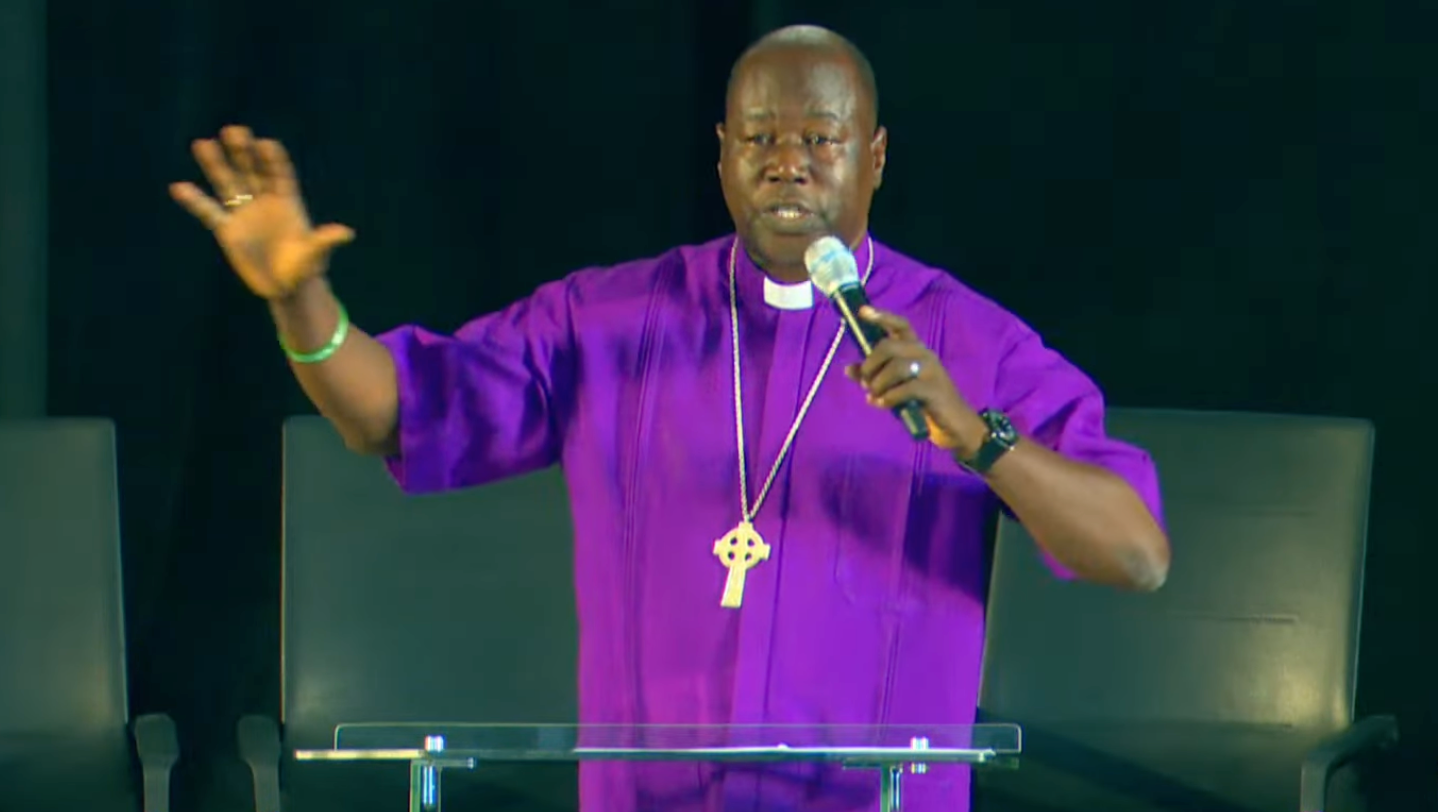
At the GAFCON G26 Mini-Conference in Abuja, Nigeria (March 3–6, 2026), hosted by the Church of Nigeria (Anglican Communion), the Rt. Rev. Alfred Olwa, Bishop of Lango Diocese in the Church of Uganda, gave the third talk in the “Road to Reordering” series: “The Bible at the Heart of Communion.” On March 5, he spoke to primates, bishops, and delegates from around the world. Olwa turned biblical history into a clear call to faith, moving from past events to present commitment.
As Chancellor of Uganda Christian University—a leading East African center for training church leaders—Olwa began warmly. He thanked his wife for being there and offered “grace and peace” to attendees from long-established Christian regions and newer, hard-won fellowships. Building on the first two talks—one on the painful road to this point, the other on reordering’s history—Olwa asked the key question: What holds us together on this journey? He said this goes beyond keeping institutions alive; it demands loyalty to God’s clear word in Scripture, which the church must follow.
Olwa quoted the GAFCON Primates’ Martyrs’ Day Statement (October 16, 2025) not as a quick fix for problems, but as a vital reminder: “The Anglican communion will be reordered. With only one foundation of communion, namely the Holy Bible, translated, read, preached, taught and obeyed in its plain and canonical sense, respectful of the church’s historic and consensual reading.” This echoes the Jerusalem Declaration’s Article 2 and the Thirty-Nine Articles’ Article 6. Olwa stressed that it’s not just a debate point, but the heart of Anglicanism’s message—Scripture isn’t only a guide, but the source of true unity, pointing to our future hope.
Olwa explained the statement’s three main points simply. First, “reordered, not invented”: Repetition is how Africans teach, he noted—and “reordering” means turning back to God. It’s not about breaking away or starting over, but fixing what’s gone wrong: church structures and leaders off track when human desires override God’s word. Reordering brings us back to trusting God.
Second, one “foundation of communion”: True fellowship has no room for bargaining over basics. The church receives its unity from Christ, revealed in Scripture—we don’t make it up. Changing the foundation risks the whole building.
Third, “the Holy Bible as Christ’s authority”: Christ rules through God’s word, so Scripture has unique God-given authority—it’s Christ’s living voice. When we honor it, we lift up the Lord; when we push it aside, we silence him.
He clarified key phrases like “plain and canonical sense” (Scripture’s own clear meaning) and “historic and consensual reading” (staying true to how the whole church has understood it). This guards against twisting the text to fit our ideas or treating it as dead words. It ties us to the saints across time, choosing faithfulness over trends.
This Bible foundation puts other ties—like laws, culture, diplomacy, or old traditions—in second place. They’re helpful but not enough. Acts 2 shows doctrine comes first, then fellowship and shared meals. Watered-down truth weakens our bonds; showy agreements replace real obedience. Without Bible-based leadership, communion falls apart.
Olwa defined authority’s purpose: not “Bible only” in a way that splits us apart, but Scripture first among church teaching, history, and agreement. This balanced Anglican approach avoids chaos and lets truth build strength.
As the third of twelve talks, Olwa’s message fits G26’s goal: strengthening orthodox Anglicanism during uncertain times in the Communion. With Uganda’s bishops leading (Asiimwe first, Olwa next), Africa’s voice highlights GAFCON’s focus on Scripture. As delegates discuss next steps, Olwa’s point stands: loyalty to God’s word, not just structures, shapes our future.