
In rejecting progressive power, GAFCON may have discovered the Protestant problem it cannot solve.
Worldwide Anglicans have been dealing with the problem of authority and the culture wars.
There are about 80 million Anglicans in the world at the moment and a conservative coalition of provinces and primates called Gafcon represents about 80% of them.
This 80% has been running a parallel jurisdiction for the last few decades but has yet to mount a direct challenge to the authority of the Archbishop of Canterbury and the Anglican Communion.
In the last few days Gafcon has been meeting in Nigeria with the intention of electing a conservative primate who would re-figure, reconfigure worldwide conservative Anglicanism around Gafcon, and challenge the dominance of the Anglican Communion which was always chaired by right by the Archbishop of Canterbury.
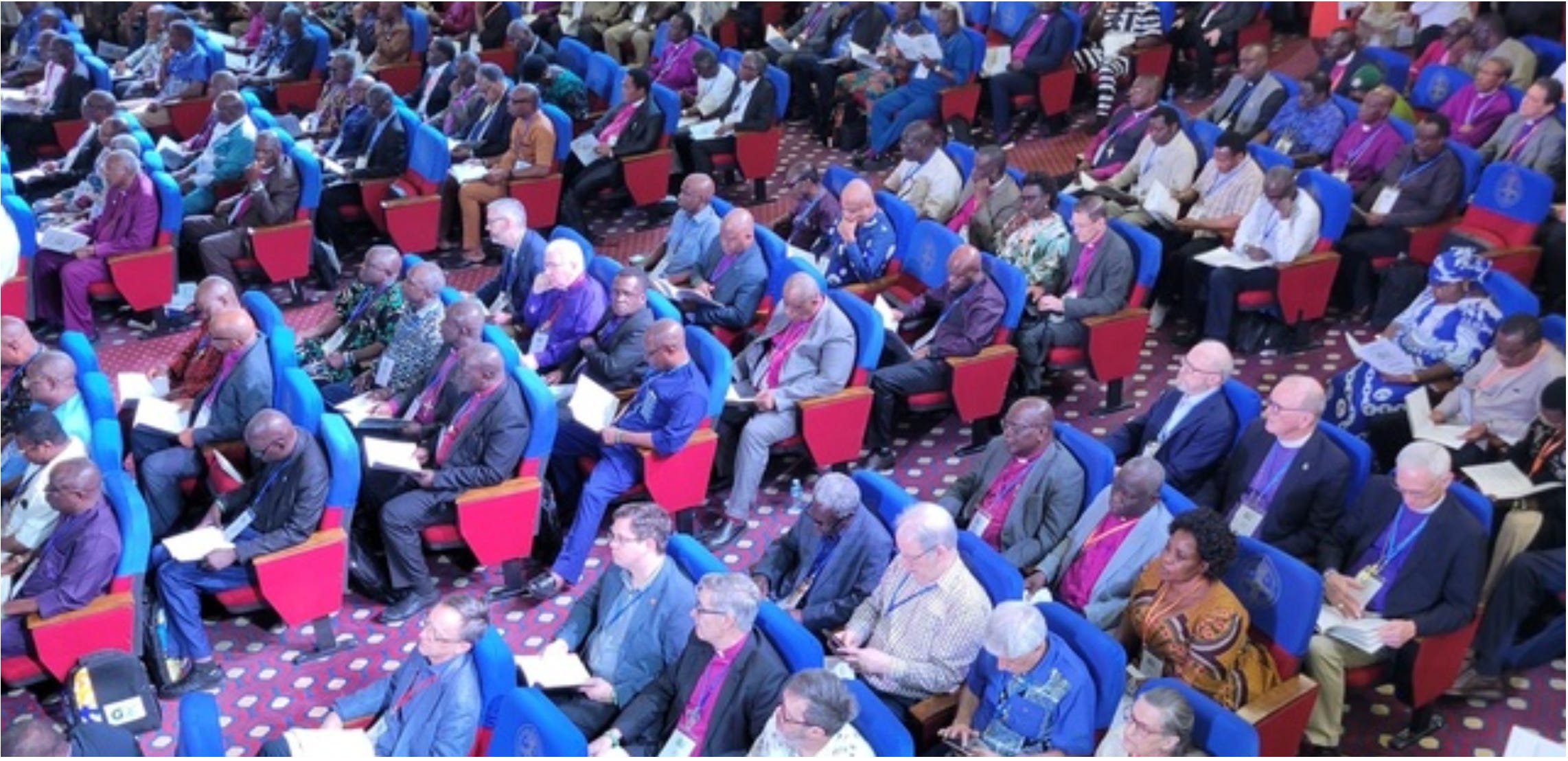
The impatience of the Africans with this arrangement was twofold. There are very few Anglicans left in England, and the English Anglican establishment has sold out to the zeitgeist; the historical legacy of colonial domination seems less appropriate with each year of diminishing heterodox influence of the Archbishop of Canterbury. Most of the Anglicans in the world live and worship in Africa.
For non-Anglicans it should be noted that Gafcon stands for the Global Anglican Future Conference, suggesting that what it lacks in poetry makes up for in accuracy.
The world was all set for this challenge taking place in Nigeria as the traditional provinces gathered, between conservative Anglicanism and the progressive secular form that dominates both the United Kingdom and America.
The news hot off the press is that that hasn’t happened. They have appointed a council instead.
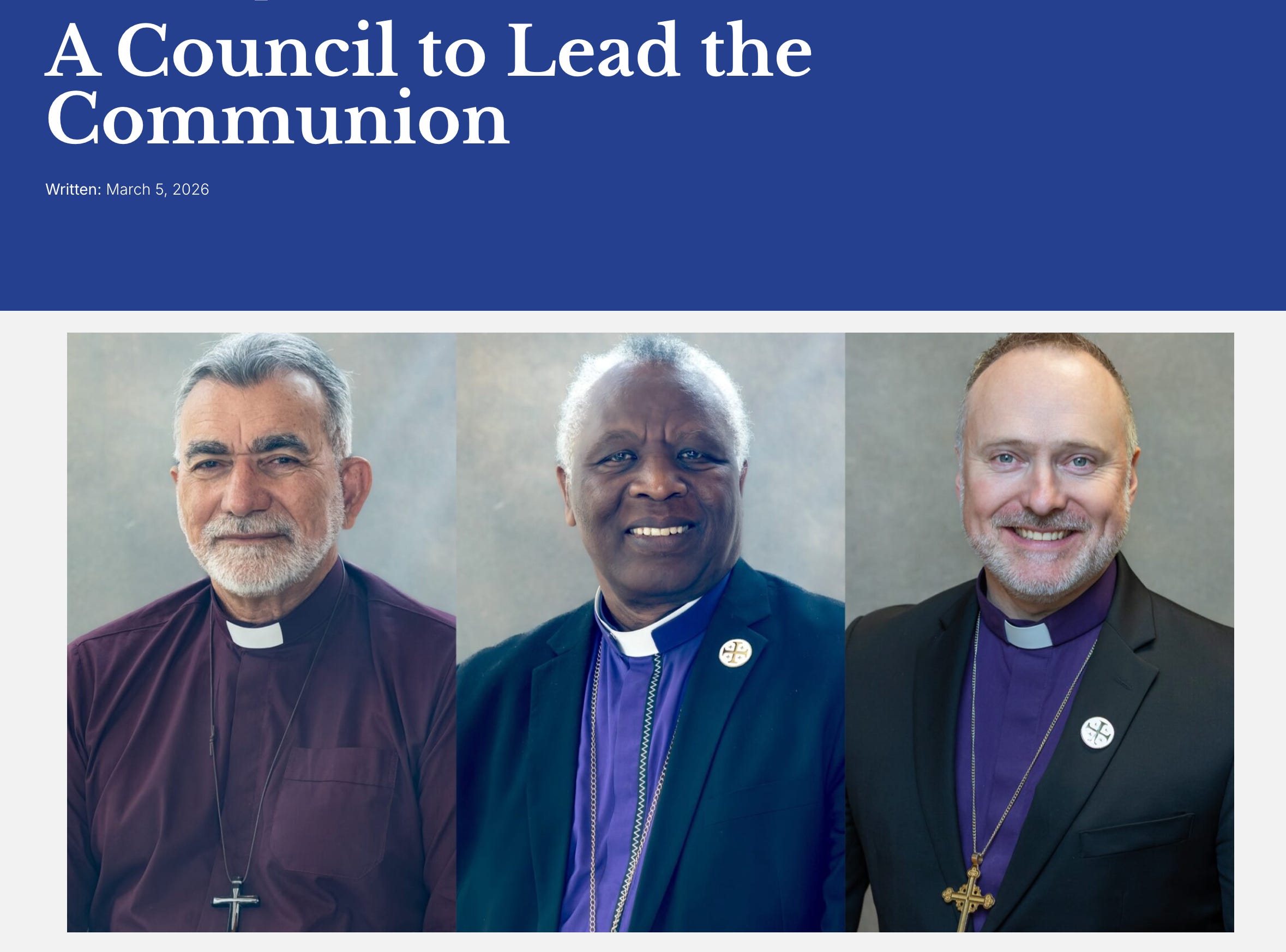
One of the questions that will be addressed in the next few days or weeks will be why?
Why should Catholics care?
Why should a Catholic Substack publication be interested in looking over its shoulder at what the Anglicans are doing?
The answer is that it is not not just out of interest in Christian fellow travellers but because what the Anglicans are doing is trying to solve their lack of a magisterium. They can’t agree where authority lies when it comes to dealing with issues like gender, sexuality and authority. This is an issue which affects us all in different degrees. How that attempt, manage or fail is a matter of some importance.
The Gafcon movement has been trying to find agreement amongst its own members representing their significant majority across the world, in order to challenge the reframing of Christian orthodoxy under the leadership of the Archbishop of Canterbury, who now of course is not a man but a woman. And not just a woman but one who celebrates abortion and homosexual marriage.
So what is the significance of their choice not to elect their own ‘primus inter pares’ (first among equals) ? This has been the strategy they have been talking about, planning and anticipating for decades now.
Have they bottled it because they fear conflict with the Archbishop of Canterbury or is there something more pragmatic going on?
The problem in microcosm
It may very well be that the problem they’re dealing with finds its expression in the microcosm of the Anglican Church in North America.
This was a reconfiguration of conservative Anglicans who have been growing exponentially and offering a reinvigorated conservative Christianity in their new movement.
Except that from the beginning they found themselves with a doctrinal and cultural issue they couldn’t solve.
It was of course the spear-tip of all the progressive cultural ideological assaults that have taken place, feminism.
Some of the new conservative Anglicans ordained women and others didn’t and they couldn’t find the courage or agreed theological clarity to solve the problem at the beginning; so they ignored it and carried it on down the years.
The American progressive Anglicans (TEC) have been enormously energetic in trying to buy the allegiance of African Anglicans to persuade them to ordain women and to be more sympathetic to the gay agenda.
If you’re a poor African diocese without the resources to run the Church properly and very rich Americans offer you a great deal of money if you will only ordain women and be more sympathetic to the relativistic agenda that follows, it’s very hard to say no. Particularly since there is no agreed locus of doctrinal authority beyond the Bible and the Progressives have developed a heterodox reading of Biblical texts with some considerable deceptive skill and determination.
One of the core issues the Anglicans have been unable to solve in Africa is the extent to which secular ideas about feminist equality relating to clerical or ministerial orders are an acceptable development to the Christian tradition, or not. Traditionalists in Britain and America warn that the development of feminism at the top of the ecclesial hierarchy is always accompanied by a determined supportive promotion of gay rights, trans rights, abortion and sympathy for the sexualised identities secularism embodies.
Why no single leader?
One of the more likely explanations for the failure to elect a single primate to carry the global battle for orthodoxy is that the African dioceses and provinces can’t agree about the women issue and the theological and political implications of feminism.
Once again, the problem with being unable to solve the issue of where do we find a magisterium is impossible to solve without having found a magisterium.
It is a critical defect.
Gafcon spans multiple provinces, jurisdictions and traditions and the problem a single Primus was going to produce was this: which province and which theology will offer the magisterial position?
Nigeria? Rwanda? Brazil? ACNA in America?
The women question divides them all and has made it impossible for them to produce a new authoritative structure under the episcopal chairmanship of a single figure.
It’s hard to know quite how demoralising this is going to be for traditionalist Anglicans.
The whole point of Gafcon was to wrest away the control of the highly progressive theological and political forces in the UK and in America and reconfigure historic traditional Christianity around faithful conservative Anglicanism elsewhere.
By not electing a single episcopal or primatial figure, but instead dedicating leadership to a diverse council, this is a sign that the quest for a magisterium has failed.
Why this matters to Catholics
Why should this matter to Catholics?
Because of course the Catholic Church is engaged in the same cultural and theological struggle with the forces of progressive secularism and is struggling for its own integrity.
The threat of schism with the SSPX in the summer is the most developed edge of this conflict; the repression of those most deeply committed to the historic liturgical life of the Church in ‘Traditiones Custodes’ the most painful.
The SSPX are claiming already that the implementation of the Second Vatican Council has given away too much to the secular spirit of the culture.
It might be worth giving some consideration to some of the theological ideological issues that lie behind this conflict.
We can lament that the Protestants have been unable to solve the problem of this conflict of epistemologies, but we shouldn’t be surprised.
One of the reasons that so many Anglicans have become Catholics is precisely because this lack of a magisterium makes the battle with secularism impossible to win in a denomination that has renounced both concept and practice. They would argue devotion to the Scriptures is the magisterium, but that has failed since the so-called ‘Reformation’ was initiated with at present at least 40,000 different ecclesial/denominational ways of interpreting the Scriptures.
Who decides and on what basis that the new ethics, anthropology and ecclesiology that the 20th and 21st century have produced are legitimate developments or illegitimate challenges?
Only a magisterium has the power to do that and within the Catholic Church the fight is over the extent to which the magisterium is recognised and granted the authority that its existence commands.
Eliot, Dawson and MacIntyre
So what is at stake?
Since we are looking at the Anglican struggle and its failure we might usefully turn to the Anglican T. S. Eliot.
In The Idea of a Christian Society (1939) he wrote: “If you will not have God (and He is a jealous God) you should pay your respects to Hitler or Stalin.”
He developed this idea by writing:
“…The modern mentality is disposed to say this is an exaggeration; but the choice is not between Christianity and something else which is neutral. The choice is between Christianity and paganism.”
What are the implications of what T. S. Eliot saying?
He was trying to persuade his readers that a society cannot remain morally coherent without a religious foundation.
The great mistake that the progressives make is that they can get rid of Christianity but still maintain the benefits of its moral inheritance.
In trying to persuade his readers that civilisation depends on a metaphysical reference point outside its power he continued:
“What is important is not that there should be a large number of Christians, but that Christianity should be the standard by which normal conduct is judged.”
Christopher Dawson takes Eliot’s critique further when he writes:
“When the religious faith which formed the basis of a civilisation declines, the civilisation itself begins to disintegrate.”
Secularisation is not a neutral process as it presents itself as being.
It dissolves and it intends to dissolve a cultural and ethical order that Christianity created.
And that is why Dawson continued:
“A society which has lost its religion becomes sooner or later a society which has lost its culture.”