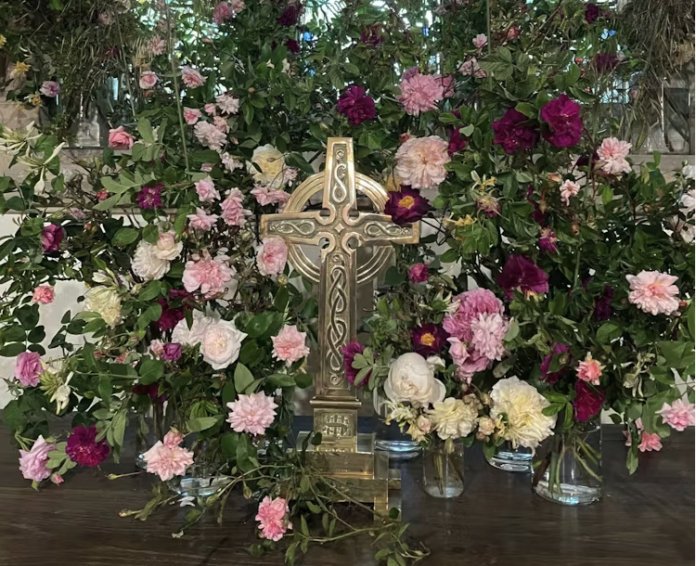
Anyone on the flower rota at England’s parish churches will now be reconsidering the way they do their arrangements, after Church of England leaders voted to use more seasonal and local flowers.
A motion to use sustainable flowers brought before the General Synod of the Church of England by the Bishop of Dudley, Martin Gorrick, was passed on February 12. The term “sustainable flowers” means using those that have travelled less distance, use less packaging and have been grown using without chemicals, high energy inputs or an excessive amount of water.
The General Synod, which considered the motion, is made up of all bishops plus representatives from every diocese, and includes the newly appointed Archbishop of Canterbury, Dame Sarah Mullally – who personally thanked those who brought the motion. The bishop said: “It is deeply theological, to honour the God who made the earth.”
Parish leaders will now need to be updated about what needs to change in planning the flowers for the front of the church.
For most churches this will mean using seasonal foliage and local flowers in weekly worship, rather than buying those grown thousands of miles away or by using intense heating to grow blooms out of season.
These sustainable flowers may come from churchyards, gardens, donation buckets or offerings from local garden clubs or allotment holders.
How The Conversation is different: All our authors are experts.
Learn more
The motion encourages all places of worship to source what is local and seasonal to them, wherever possible. It aims to phase out the use of floral foam, which has traditionally been used for flower arranging. And it links the theology of stewardship of creation and the planet to how to treat nature, promoting seasonal and compostable flowers and foliage.
It is likely to mean trying different techniques such as going back to some traditional methods used before floral foam was invented in the 1950s.
I was there to hear the bishop say that the decision to phase out floral foam is about moving away from single-use plastics and manufactured alternatives, towards simpler methods of display, such as vases, sticks and other reusable and compostable materials.
What the church does matters, it uses millions of flowers every year in its displays. Its impact goes far beyond the church doors.
If the around 12,000 Church of England parishes only averaged two bunches a week, that would be over 1.2 million a year and millions of stems. Additionally there are huge numbers used at church events such as weddings and funerals, and brought into churchyards. The church’s decision could also drive more Fairtrade sales where local flowers are not available.
With this potential source of business changing, florists might be encouraged to provide plastic-free options, and consumers might be more aware when choosing their flowers – such as for St Valentine’s Day and beyond.
Read it all in The Conversation