A cross-party group of 27 Members of Parliament and peers have called on the Archbishop-designate of Canterbury, the Rt. Rev. & Rt Hon. Sarah Mullally, to intervene and halt the Church of England’s proposed £100 million slavery reparations fund.
In a letter first reported by The Sunday Times of London (28 Dec. 2025), the parliamentarians warn that the plan—known as “Project Spire”—risks setting a “worrying precedent” by encouraging other institutions to divert charitable resources to political or symbolic causes. The signatories, led by Shadow Home Office Minister Katie Lam and including senior Conservatives Chris Philp, Claire Coutinho, and Neil O’Brien, say the scheme represents a “misuse” of funds legally designated to support parish ministry and the upkeep of the Church’s historic fabric.
“At a moment when churches across the country are struggling to keep their doors open – many even falling into disrepair – it’s wrong to try and justify diverting £100 million to a project entirely separate from those core obligations,” the letter states.
“Project Spire” was launched following an internal investigation by the Church Commissioners that uncovered financial links between the Church’s historic endowment and companies involved in transatlantic chattel slavery during the 18th century. In response, the Commissioners announced a £100 million fund dedicated to “healing, repair, and justice,” aimed particularly at communities historically affected by slavery. The investment was designed to grow over time and support educational and economic initiatives among marginalised groups.
A Church Commissioners’ spokesperson defended the initiative, telling The Sunday Times that “the Church Commissioners, as a 320-year-old Christian in-perpetuity endowment fund, has committed £100 million to set up a new investment fund to support healing, justice and repair, in response to the discovery of its historic links with Transatlantic African chattel enslavement.” The spokesperson added that the plan aligns with the Church of England’s Fourth Mark of Mission—to “seek to transform unjust structures of society, to challenge violence of every kind, and pursue peace and reconciliation.”
Critics of the plan argue that the Church Commissioners’ legal obligations under charity law restrict the use of endowment income to specific ecclesiastical purposes, including parish support, clergy pensions, and the maintenance of church buildings. Diverting funds to reparative or political projects, they suggest, could open the Church to judicial challenge and broader financial risk.
“The Church has a long and complex historical record, one that includes both moral failures and courageous leadership in the abolitionist movement,” the MPs wrote. “To reduce this history to a simplistic narrative of guilt does a disservice both to truth and to the Church’s own legacy.”
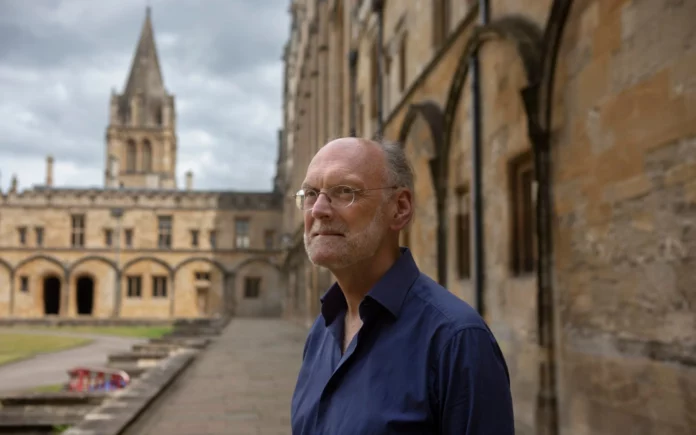
Lord Biggar, emeritus Regius Professor of Moral and Pastoral Theology at Oxford and an Anglican priest, has mounted one of the most sustained historical critiques of Project Spire. In a detailed commentary, he argues that the Commissioners’ own rhetoric runs “way ahead” of the evidence when it claims that the Church’s “immense wealth has always been interwoven with the history of African chattel enslavement” and that the transatlantic slave economy “played a significant role in shaping the Church we have today.”
Lord Biggar notes the Queen Anne’s Bounty investments in South Sea annuities are far more ambiguously connected to slavery than Project Spire documents suggest, and that the historical panel advising the Commissioners fails to quantify how much of the Church’s wealth in fact derived from slavery‑linked instruments. He and other scholars associated with the History Reclaimed initiative conclude that Project Spire rests on “unsound history,” and warn that it encourages sweeping, unfounded accusations of collective guilt against both the Church and the nation.
A central plank of the conservative critique is that the Church’s record on slavery is not one of simple complicity, but of grave sin alongside significant repentance and leadership in abolition. Lord Biggar points out that the Commissioners’ narrative is almost entirely silent about Anglican clergy and lay evangelicals who spearheaded the anti‑slavery movement, including the Clapham Sect and other churchmen whose theological convictions drove the political campaign that ended the slave trade and, eventually, slavery itself.
Historically, only a minority of Britain’s wealthier classes had direct financial links to slavery, while millions of ordinary Britons had no stake in the trade and in many cases actively supported abolitionist efforts. To portray “everyone in eighteenth‑century Britain” or “the Church as a whole” as structurally complicit, Lord Biggar argues, is both historically inaccurate and ethically unjust, because it imputes guilt to people who neither consented to nor benefited from the slave economy.
The reparations push raises deeper theological questions about sin, guilt, and the nature of the Church’s mission. LordBiggar contends that Project Spire reflects what he calls a modern “lust for self‑condemnation,” in which institutions seek moral absolution by publicly denouncing their own supposed systemic wickedness rather than practising ordinary faithfulness in word, sacrament, and pastoral care.
Critics worry that the language of “continuing toxic consequences” and “damage caused by past injustice which continues via present injustice” edges toward treating guilt as hereditary and corporate in a way that sits uneasily with classical Anglican teaching on personal sin, repentance, and grace. They ask whether it is coherent to speak of financial “reparation” to contemporary populations whose relationship to eighteenth‑century slavery is complex, diverse, and often indirect, and whether such payments risk collapsing the gospel’s message of forgiveness into a political programme of permanent grievance.
According to The Sunday Times, the signatories have asked Dame Sarah Mullally to clarify her stance before her confirmation as Archbishop of Canterbury next month. “A clear signal from you now that the focus of the Church under your leadership will be the strengthening of parishes, not the pursuit of high-profile and legally dubious vanity projects,” the letter continues, “would reassure the many worshippers, clergy, and members of the public who have contacted us with their concerns.”
The controversy has emerged at a delicate moment for Bishop Mullally, who will become the first woman to hold England’s highest clerical office. With parish closures accelerating and attendance figures falling, she faces the immediate challenge of balancing the Church’s commitments to social justice with its duty of care to struggling congregations.