In the introduction to his magisterial 1967 work The Glory of the Lord, Catholic theologian Hans Urs von Balthasar notes that Christian scholars have largely abandoned the effort to think about beauty. He adds that “the transcendentals are inseparable, and that neglecting one can only have a devastating effect on the others.” The “transcendentals” – truth, goodness, and beauty – are so called because they are the fundamental and universal qualities of reality that point us beyond this world to God. Because God is the good creator, all that he creates is characterized by truth, goodness, and beauty. The transcendentals are synonymous with being and with each other, which is why Balthasar worried that the neglect of beauty would lead also to the neglect of goodness and of truth.
Over half a century after The Glory of the Lord was first published, it is hard to say that truth and goodness are in the best of health in the Christian world. If we consider how perspectives filter down from the theologians to congregations, it can seem like we have some churches that specialize in truth and others that specialize in goodness, though few focus on both. Perhaps what is missing is the third transcendental, beauty, to bind them together. If so, there is cause for hope: beauty’s comeback is on the way. In recent years, there has been a resurgence among theologians writing about beauty and aesthetics. If this renewed interest in beauty were to filter down to the churches, it could change American Christianity in several important ways. If, that is, Christians can come to some “merely Christian” understanding of beauty and its place in the life of faith.
The handful of fascinating and important books on Christianity and beauty that have been published in the last few years have come from several different confessional traditions and approach the subject from several different angles. What they all share, though, is the insistence that Christians should take beauty seriously. These books join others published in recent years in contributing to what will hopefully be an ecumenical retrieval of beauty in the thought and life of the church.
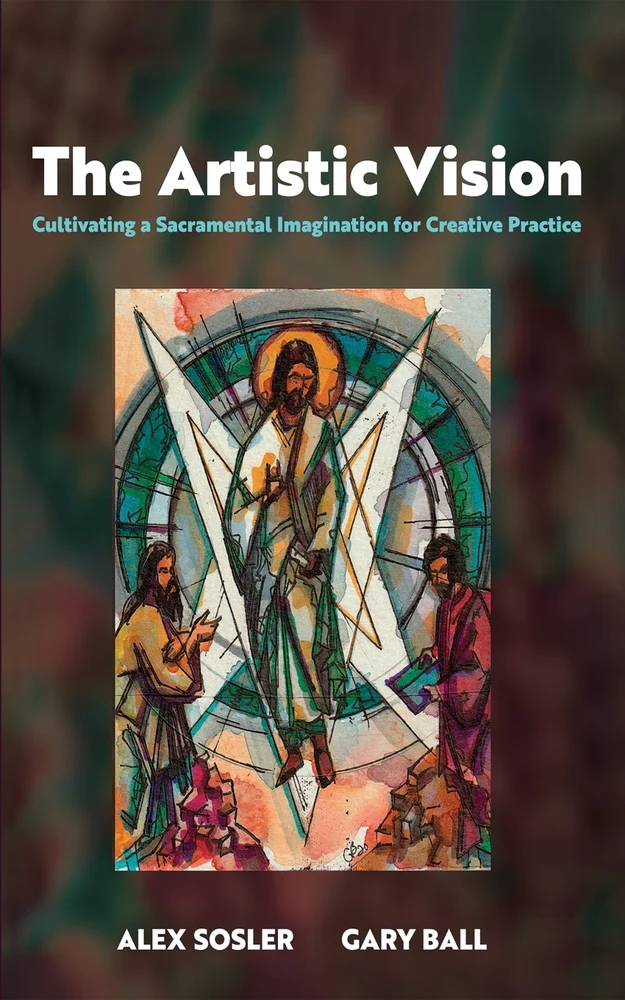
The Artistic Vision: Cultivating a Sacramental Imagination for Creative Practice, by Alex Sosler and Gary Ball, is the only book among those reviewed here that is aimed expressly at practicing artists, yet it may also be the most broadly applicable. Both authors are Anglican priests, and their goal is to encourage and support artistic practice in the church. Although they frequently discuss poetry, the book is primarily focused on visual art, particularly painting. Despite this focus, the discussion is far-ranging, in part because one of the authors’ main concerns is the way the church helps to shape the imagination of the artist. They write, “First, the church trains the vision of artists while artists can help restore mystery and reverence for the world. Second, the church provides a story and community for the artists, while artists shape space and place. Lastly, the church can be a place of rest and depth for the artists, while artists can express what’s there in the depths.” The church feeds the soul of the artist, and the artist feeds the soul of the church.
Sosler and Ball emphasize that fostering beauty in the life of the church requires pushing back against the rationalist assumptions of our age, which reduce beauty to, at best, a secondary concern to truth and, at worst, a deceptive threat to both truth and goodness. Sosler and Ball enlist the help of the Oxford Movement for this necessary correction: “The Oxford Movement theologians had largely attributed the state of the church to an over-rational approach to Scripture that had made its way to England from Germany.” Among theologians such as John Henry Newman, Edward Bouverie Pusey, and John Keble, beauty was valued for its ability to draw us closer to God, independent of rational or theological propositions. The Oxford Movement sought to take back space in worship services from the sermon, which had expanded and squeezed the more symbolic and mysterious elements of worship into the margins. This countermovement in the Church of England thus emphasized the sacraments.
This legacy of a movement within the Church of England – as expounded on by two Anglican priests – may seem like a purely Anglican concern. Yet, within Sosler and Ball’s distinctly Anglican vision for art’s revival in the church, there are seeds for a more ecumenical understanding of beauty’s place in Christian thought and in the Christian life. The possibility for a unifying view of beauty comes through the relationship between beauty and the sacramental. This hope may seem surprising, since Christians have been endlessly divided over the nature of the sacraments since at least the sixteenth century. We have been divided over the sacraments, however, because none of us is indifferent to them. We argue over their nature. We even argue over their number. But we all do something sacramental at least in connection with the final meal Jesus shared with his disciples. We may call it the Eucharist, Communion, or the Lord’s Supper. We may subscribe to transubstantiation, consubstantiation, spiritual presence, or the memorial view. We may receive it from a priest, walk the aisle, take it in the pews, or share it around a dining table. Nevertheless, it is there in our worship.
Since we often disagree about the sacraments themselves, the most important point made in The Artistic Vision may be that beauty is not a sacrament but rather is sacramental. The authors state, “When we say sacramental, we are referring more to the artist’s vision than what their art is. The divine presence, in this sense, changes an artist’s way of seeing. When we participate with God in the act of seeing and therefore creating, it leads us into contemplation of the divine, and therefore the divine realities become present to us.” Beauty doesn’t impart or channel grace but, rather, helps us to see grace. Such a concept of the sacramental nature of beauty is big enough to include both Balthasar’s conception of “form” as the portal of the glory of the Lord and the common Baptist observation that a beautiful sunrise is an incitement to worship our creator. Beauty, in some sense, brings us into the presence of God.
Turning from Anglicanism to the broader evangelical world, we find Philip Ryken, president of Wheaton College, contributing to the theological understanding of beauty with his recent book, Beauty Is Your Destiny. Ryken is a Presbyterian minister, but he speaks for a wide evangelical consensus. He has relatively little to say about beauty in art, focusing rather on beauty as an aspect of essential Christian doctrine.