The Russian Orthodox Church’s surprising endorsement of legislation recognising “de facto marriages” with fallen soldiers has exposed theological and political fault lines within Russia’s power structure, raising profound questions about the flexibility of traditional values in service of the state.
The controversial bill proposes granting legal recognition to informal relationships between women and soldiers killed in Ukraine, allowing these “posthumous wives” to receive the same social benefits as legally married spouses. The legislation requires couples to have cohabited for at least three years before deployment, reduced to one year if they have children together, reports AsiaNews.
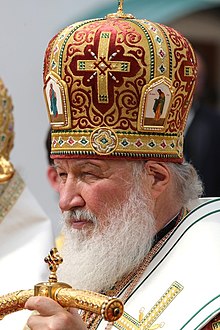
In an unexpected move, Patriarch Kirill of Moscow endorsed the bill in a letter to State Duma Speaker Vyacheslav Volodin, declaring it “deserves support”,. The patriarch’s backing came at the request of Senator Andrei Klishas, chairman of the Federation Council’s Committee on Constitutional Legislation and State Building. This endorsement represents what critics have termed “Orthodox utilitarianism” – the adaptation of traditional moral principles to serve state Opposition and Traditional Values
The patriarch’s position faced immediate resistance from within the Duma itself. Two deputy speakers – Anna Kuznetsova, described as a priest’s wife and mother of seven children, and Irina Yarovaya – opposed the legislation, arguing it violated traditional values. Their objections appear to have influenced Speaker Volodin, leading to the bill being “shelved indefinitely”.
This resistance reflects what scholars identify as a “fundamentalist” approach to traditional values, contrasting with the patriarch’s more “lenient” interpretation. Kuznetsova and Yarovaya, identified as part of Russia’s “baba commissars” – powerful women parliamentarians who often take more extreme conservative positions than Putin himself – exemplify this traditionalism.
The Orthodox Church’s support draws upon the concept of *oikonomia* – a traditional principle allowing flexible application of canonical norms based on individual circumstances. As explained by church officials, this principle considers “usefulness for the life of the state” before individual believers’ needs, potentially “sacralising” even irregular marriages when they serve state purposes.
The administrator of the patriarchate, Igumena Ksenia Chernega, clarified that the Church supports the bill not merely from sympathy, but to support President Putin’s intentions in confirming the values of heroes and veterans of what Russia terms its “holy war” against the Ukraine.
The financial stakes are substantial. Russian families of deceased soldiers can receive over 8 million rubles (approximately $95,000) in compensation, including federal and regional bonuses. This significant sum has led to concerning phenomena, including allegations that some women enter marriages with soldiers specifically to claim these benefits if they die. The legislation emerges from Russia’s significant military casualties in the Ukraine and resulting social challenges. Tens of thousands of soldiers have died since the invasion began, leaving many unmarried partners without legal recognition or financial support.
This controversy reveals the complex relationship between Russian Orthodoxy and state power. The late Archpriest Vsevolod Chaplin, who once wielded considerable influence, previously described Patriarch Kirill as a “collective project,” highlighting the institutional nature of church leadership. The current debate suggests continuing tensions between different conceptions of traditional values within Russia’s religious and political establishment.
The Russian interpretation of oikonomia considers “usefulness for the life of the state” as potentially redemptive for various moral infractions, including irregular marriages “from that of the president to those of soldiers in the field”. This approach allows the state’s needs to serve as a “source of redemption” for moral law violations.
The Orthodox Church historically permits second and even third marriages as “reparation” for sacramental marriage failure, though with increasingly penitential ceremonial elements. This tradition of flexibility provides theological precedent for the current debate, though posthumous recognition represents a novel application.
The controversy occurs against Russia’s broader campaign to define traditional values constitutionally. Putin’s 2020 constitutional amendments enshrined marriage as a union between man and woman, while simultaneously the parliament has grappled with various family law reforms.
The shelving of the bill demonstrates that even with patriarchal endorsement, legislation faces practical political constraints. The resistance from Kuznetsova and Yarovaya – both identified as more conservative than the patriarch himself – illustrates the complex dynamics within Russia’s ruling United Russia party.
The debate reveals fundamental questions about the nature of traditional values in contemporary Russia – whether they represent absolute moral principles or flexible guidelines adaptable to state needs. The Orthodox Church’s embrace of “Orthodox utilitarianism” suggests institutional alignment with state pragmatism over theological consistency.
This controversy ultimately exposes the tensions inherent in Russia’s attempt to reconcile traditional religious values with the practical demands of an authoritarian state prosecuting an unpopular war. The patriarch’s support for posthumous marriage recognition may represent theological flexibility, but it also demonstrates the extent to which religious authority has become subordinated to political expedience in Putin’s Russia.