There are dolphins and puffins. Sometimes even whales. There is something magical about the island of Iona — the sea was crystal clear azure, the sky vast. People call this a thin place because the gap between heaven and earth feels like little more than a wafer. It was here, right on the edge of the world, that an Irish monk called Columba began a monastic community in 563 AD. A few wooden shacks on a tiny rock facing out into the Atlantic Ocean was to become one of the great bridgeheads for the conversion of the British Isles to Christianity. From here, the faith spread to the island of Lindisfarne, off the Northumbrian coast, and from there, out across the country. This tradition gave us the great saints of Aiden and Cuthbert.
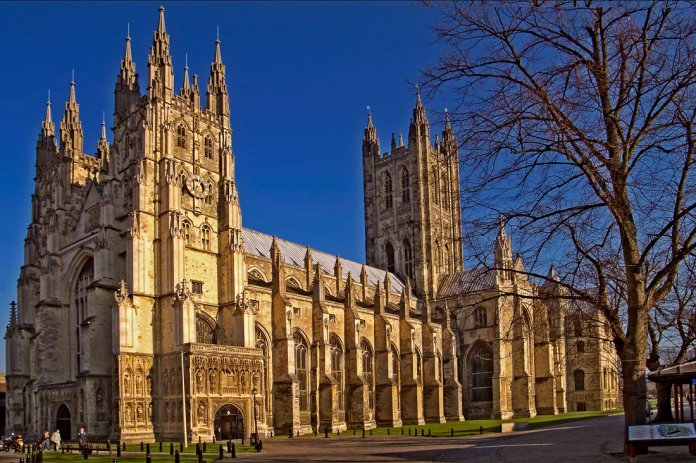
The year after Columba died on Iona, another mission to convert the British began, this one landing in Kent. This was the official mission. Initiated by the Pope, it was fronted by a Roman priest called Augustine who would become known as the “apostle to the English.” He was lucky. The local Kentish king was married to a Frankish Christian woman, so the new faith was not unknown. Things went so well for Augustine’s mission that he remained in Kent and set up his headquarters there. This is why the current leader of 100 million Anglicans, all over the world, takes his title from the small town of Canterbury.
If things proceed as planned (and they probably won’t) there could be a new Archbishop on the throne of Augustine by the autumn. It has taken so long because the Diocese of Canterbury couldn’t get its act together to work through the thicket of electoral rules that govern the election of three members of the Canterbury Diocese to the Crown Nominations Committee (CNC), the appointing body for the next archbishop. They had three botched elections before they finally got it right. It took the Roman Catholics 17 days from the death of Pope Francis to the election of Pope Leo. That election transfixed the world with its pomp, glamour and excitement. Our process will be done in committees, and though certainly more inclusive, will be as dreary and procedural as taking out a mortgage. And it is being run by the former boss of MI5, so don’t expect any interesting leaks. Though this much he has said: we must avoid a short list “all of whom are white, Oxbridge, male and come from the southeast of England.”
The problem in finding a suitable person is this: it has become an impossible job. Not just difficult, but impossible. After all, the Archbishop has to be in more than one place at the same time — as both head of the Church of England and head of the worldwide Anglican Communion — and also because it necessitates the ability to say totally opposite things to the very different and warring tribes of the church. It is a job where much is expected, but with very little power to achieve it. The Church of England is mired in layers of deadening bureaucracy. Many clergy feel unloved and overworked. Morale is low. A report on the issue of trust within the Church has recently been canned because to investigate it might “do more harm than good”, the Bishop of Peterborough explained recently.
Which is why no one wants the job. To be the Archbishop of Canterbury is to put yourself into the meat grinder. You are asked to speak Christian truths to a nation that largely couldn’t care less what you say, unless you say something silly or too political. Then the press will chew you up. You are asked to take royal funerals and make speeches in the House of Lords, yet also to have the common touch, appealing to everyone. “All things to all people,” as Saint Paul described it.
No wonder anyone with the slightest shred of self-preservation would run a mile from the job — leaving only a bunch of deeply unexciting candidates. Many would love to see the current Bishop of Chelmsford, Guli Francis-Dehqani, as Archbishop. Born in Isfahan, her father was the first ethnic Persian to be Bishop of Iran since the 7th century. In 1980, her brother was murdered by Iranian government agents. She is Church of England through and through, but with a global perspective. Her maiden speech was described as “a powerful and very personal debut from Chelmsford that had several pees wiping away tears and saying it was the finest they had heard.” This is exactly what the Church needs. But perhaps she may not have the Teflon skin required to survive the nastiness of the Church and the press. Bishop Guli took time off work to bring up her children, and she is not one of those hard-bitten career clerics who would do anything for the top job, even to the detriment of their families.
One way of proceeding would be to split the job in two, with Canterbury doing England and another Archbishop looking after the rest of the world. Pretty much everyone agrees this would be a good idea. But separating these Siamese twins will take time, perhaps years. And having someone in to steady the ship whilst the necessary surgery is performed is not a bad idea. And there is probably no better candidate here than the current Bishop of London, Sarah Mullaly. She is 63, so couldn’t do it for ages. As a former chief nursing officer, she has an interesting hinterland. But who knows if she would be prepared to do it.
I am not singling out two women for ideological reasons. The reality is just that when it comes to men, the cupboard is bare. The Bishop of Norwich, Graham Usher, would have been great, but he has cleverly dodged the bullet by getting himself on the CNC appointing committee, and so is ineligible. There are some Welby continuity candidates out there, like Martyn Snow, the evangelical Bishop of Leicester, who is the one person who looks like he wants it. But the Welby era proved to be so disastrous that it’s hard to imagine anyone would want to risk a repeat of that. Safeguarding issues — real or imagined — are now kryptonite to any potential candidate, and it’s hard to think of many senior bishops for whom this is not a problem, however unfair that might be.
The Church of England is at a fork in the road. Those who see the long arc of history as pointing inevitably towards a more secular society predict only more decline. But the evidence of history suggests that the Church often goes through periods of greater and lesser popularity. And we need someone who doesn’t panic about the challenge of secularity. A steady faithful presence in Lambeth Palace, someone who isn’t constantly firing off nervous new initiatives, redirecting the church’s resources to glitzy new evangelistic movements, is essential. We have had enough of breathlessly conceived boom-and-bust initiatives. We need the calm of someone who has spent proper time with the sea and the sky, with the kind of demeanour that has been formatted by eternity, rather than the frenetic pace of meetings at Lambeth Palace. When they go fast, he or she must go slow.
Read it all in UnHerd