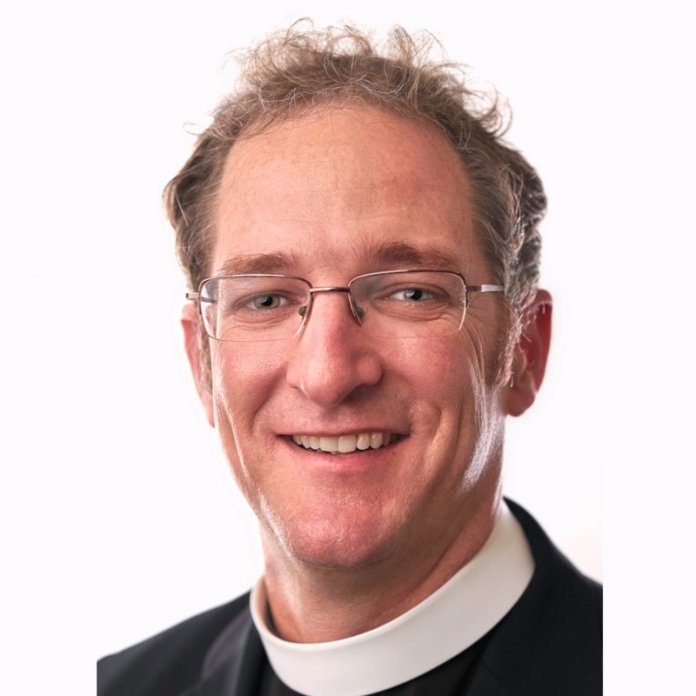
The Episcopal Church’s Court of Review has ruled in favor of a Virginia priest who was disciplined for conducting a three-year “Eucharistic fast” as a protest against racial injustice. The decision reverses the Diocese of Virginia’s disciplinary action against the Rev. Dr. Cayce Ramey.
Dr. Ramey, who served as rector of All Saints Episcopal Church in Alexandria (Sharon Chapel), initiated his controversial fast in June 2021. The action involved his refusal to preside at the Eucharist or receive communion while continuing to perform other priestly duties including preaching, proclaiming the Gospel, and conducting baptisms. Dr. Ramey, who is white, described his fast as a spiritual response to what he characterized as the church’s failure to adequately address its history of white supremacy and racial injustice.
The Diocese of Virginia, under then-Bishop Suffragan the Rt. Rev. Susan Goff, initiated disciplinary proceedings against Dr. Ramey in November 2022. The Rt. Rev. E. Mark Stevenson, who was consecrated in December 2022, subsequently barred Dr. Ramey from performing priestly duties while the case proceeded. Ramey stepped down as rector in December 2022, one month after the disciplinary action began.
The Episcopal Church’s Court of Review delivered a split decision that largely vindicated Ramey’s position. The 10-member majority ruled that diocesan leaders had committed “consequential procedural errors” and misinterpreted church canons in their disciplinary proceedings. The court found that the diocesan hearing panel had “misinterpreted or misapplied the Canons, engaged in a decision-making process inconsistent with Title IV and made findings that are not supported by substantial evidence”.
Specifically, the Court of Review overturned several key findings by the diocesan hearing panel:
Violation of ordination vows: The court ruled that neither former Bishop Goff nor current Bishop Stevenson had issued clear pastoral directives ordering Dr. Ramey to end his fast.
Habitual neglect of Holy Communion: The court noted that Dr. Ramey had continued to participate in all aspects of the Eucharist except presiding and receiving communion, while ensuring his parish never lacked access to the sacrament through joint services with neighboring congregations.]
Conduct unbecoming clergy: The court found insufficient rationale for this charge and reversed the finding.
However, the decision was not unanimous. Six members dissented, arguing they would have upheld parts of the hearing panel’s findings, including violations of ordination vows and neglect of Holy Communion. The dissenting opinion warned that “Ramey’s unilateral and unequivocal decision to abstain from celebrating the Holy Eucharist… sets a dangerous precedent” and could “permit any priest to do the same regarding various human sins”.
Bishop Stevenson described the Court of Review’s decision as “complex and nuanced” and indicated it would “take time to fully digest”. Despite the disciplinary conflict, Bishop Stevenson emphasized substantial agreement with Dr. Ramey on addressing racial justice issues, stating that “confronting racism remains mission critical” for the diocese.
While the court explicitly stated that its “decision does not reflect an endorsement of Ramey’s actions or his theological views,” the ruling effectively validates a priest’s right to engage in liturgical protest under certain circumstances.
Ramey’s fast was conducted in a manner that ensured his parish continued to receive the Eucharist through joint services with neighboring congregations – a partnership that had been strengthened during the COVID-19 pandemic. Several of these partner congregations have since merged, while All Saints chose to remain independent and has called a new priest willing to fully celebrate the Eucharist.
This ruling may establish important precedents regarding the limits of episcopal authority and the rights of clergy to engage in forms of liturgical protest, particularly around issues of social justice that have become increasingly prominent within The Episcopal Church’s internal debates.