
10 March 2020
In this time when we are all affected by the coronavirus, whether directly or indirectly, whether physically, biologically, psychologically, spiritually, and for many economically, it may be helpful to remember that we’re in this together.
Jesus came among us in the first place, to show us the way to be right and reconcile with the God who is the creator of us all, and right and reconciled with each other as children of this one god who has created us all, and therefore as sisters, brothers, and siblings, one of another.
Jesus came to show us how to be in a relationship with God and in relationship with each other, came to show us how to live not simply as collections of individual self-interest, but how to live as the human family of God. That’s why he said love the Lord your God, love your neighbor as yourself. Because in that is hope for all of us to be the human family of God.
I was in Cuba the last few days with Bishop Griselda and the good people of the diocese there as we received and welcomed them as a full part of The Episcopal Church. A while back when she spoke to the last diocesan synod before they became part of The Episcopal Church, she said, and I quote, “The reason we must become part of The Episcopal Church is so that we can be part of a big family.” She spoke by prophecy. We are all part of a big family. Bigger than our biological families, bigger than our immediate families, bigger than our congregations, bigger than our dioceses, bigger than our cities, our states, our nation.
We are part of the human family of God. Jesus came to show us that his way of love is the way of life. It’s God’s human family.
We are in a time when remembering that may be important for all of us.
We are in this together.
What affects some directly affects all indirectly.
We are part of a family. The human family of God.
Just over the weekend the head of the World Health Organization, said this, and I quote, “We have seen this coming for years. Now is the time to act. This is not a drill. This epidemic can be pushed back, but only with collective, coordinated, and comprehensive approach by us all.”
It takes us all. We are family.
And then one of the spokespersons for the European Union, speaking to the member states said this, and I paraphrase: We must share our resources and our information. It is not the possession of any one nation.
In each of those calls, and in the calls of many of our leaders, we have heard again and again, that we are in this together, we can walk through this together, and we will find our way in our life together.
So look out for your neighbors, look out for each other. Look out for yourselves. Listen to those who have knowledge that can help to guide us medically and help to guide us socially. Do everything that we can to do this together, to respond to each other’s needs and to respond to our own needs.
Walk together children, don’t get weary, because there’s a great camp meeting in the promised land.
Allow me to close with this prayer found on the website of Episcopal Relief & Development, where there are resources and where information can be found.
God of the present moment,
God who in Jesus stills the storm
and soothes the frantic heart;
bring hope and courage to all
who wait or work in uncertainty.
Bring hope that you will make them the equal
of whatever lies ahead.
Bring them courage to endure what cannot be avoided,
for your will is health and wholeness;
you are God, and we need you.
This we pray in Christ our Lord. Amen.
God love you. God bless you. May God hold us all in those almighty hands of love.
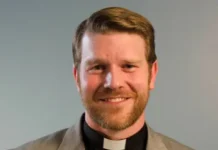


An Episcopal priest, the rector of a large parish in Georgetown, Washington, DC, inadvertently exposed perhaps a thousand people to the Wuhan virus over the past weekend. He’d had, he thought, flu, and was feeling better, so carried on with his job. Then he became more ill, was hospitalized and tested for the virus. I read in one report that he had recently returned from a meeting of Episcopal leaders in Lexington, KY. Is this so? Is the church addressing this possible exposure and spread within the larger church?
Surely(?) common sense dictates that any reasonably intelligent person will take precautions, whether it be the ‘flu season or coronavirus?
Whatever our beliefs we must respect the well being of the people around us. To carefully wash our hands, to stay home if we feel unwell, to use antibacterial tissues to wipe our hands when we go out shopping, and to keep our distance from each other(!) will help to bring this epidemic to an end. Giving in to fear and self preservation is not the Christian way. Taking responsibility for our actions is.
It may just be my suspicious mind, but paragraphs two and three above seem to be teetering right on the brink of heresy.
Jesus came to save me and bring me into a right relationship with God, because I am unable to do this for myself. Without Him, I am rightly damned.
He did not, ever, suggest that my eternal fate depended on being nicer, more helpful or some other sort of “better living”, not because these things are bad of themselves, but because this amounts to salvation by works. It has echoes of the emotive tripe this man uttered at Harry & Meghan’s wedding. As then, this seems to be hubristic nonsense.
For the avoidance of doubt, Coronavirus should remind us all that our earthly existence, and indeed, our culture and human society can vanish in a moment because of something so tiny and apparently insignificant that we can’t even see it. Western culture, which used to be Christian in its outlook (some of the time), has now largely rejected the Gospel and has its priorities completely wrong.
I don’t believe God is necessarily judging us through this, but it is certainly a time for all of us to reflect on our relationships with the Almighty, in a spirit of repentance and hope — a real hope vested in the only one who can actually save anybody eternally.
I wonder if this silly man actually “gets” that…
.
I don’t think you are overly suspicious. I recall his predecessor said something similar about being saved when we do good things without a hint of the necessity of Faith. My own interpretation is that Curry’s notion of “love” is vacuous and weak. Like much of contemporary, liberal society this kind of “Christianity” puts the spotlight on us making God accommodate our desires.