
In the nautical novel Moby Dick, Herman Melville has a chapter where he paints a magnificent portraiture of Father Mapple’s grand pulpit. Beginning with a physical sketch, Melville soars to a pen a spiritual interpretation of the pulpit.
“What could be more full of meaning?” he writes, “for the pulpit is ever this earth’s foremost part; all the rest comes in its rear; the pulpit leads the world. … Yes, the world’s a ship on its passage out, and not a voyage complete; and the pulpit is its prow.”
What happens to the world when the pulpit goes into silent mode refusing to speak the Word of the Lord to the life-and-death issues of our times?
The genocide of 6million Jews in Nazi Germany elicited few condemnations from the pulpit. At the Treysa Conference in August 1945, church leaders confessed the complicity of their pulpits: “Long before our churches became piles of rubble, our pulpits were restricted and our prayers were silenced.”
An exponentially greater genocide of 61 million unborn babies in the US since Roe v. Wade, 9million in the UK since 1967, and an unspeakable figure of over one billion five hundred twenty-three million worldwide since 1980, has elicited even fewer condemnations from Protestant pulpits in the US and UK.
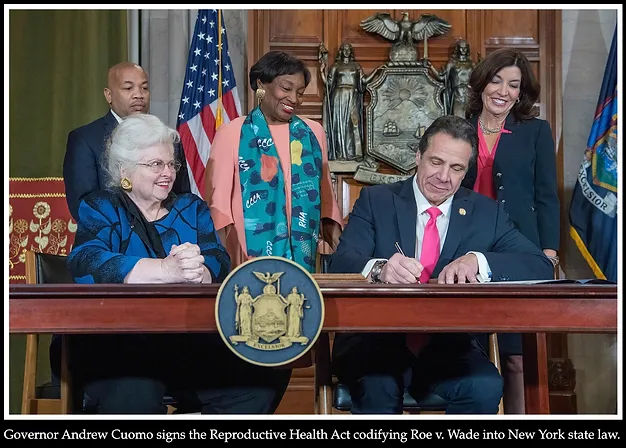
The radical abortion laws passed last week by the New York State Legislature is raising questions of how some of the most celebrated conservative evangelical churches and preachers are addressing the global genocide of the unborn.
Surely conservative pulpits can no longer remain muted when the barbaric but euphemistically titled Reproductive Health Act treats abortion as a “fundamental right,” allows non-physicians to perform abortions, allows abortion through the third trimester—including up to birth, and removes protections for babies who survive an abortion—meaning they could be left to die after birth?
History reveals a shameful reticence on the part of American evangelicals to engage in pro-life advocacy before the late 1960s.Christianity Today, the flagship magazine of evangelicalism, did not publish its first article on abortion until 1966. Few evangelicals joined Catholics in campaigning against abortion. Even Billy Graham was willing to allow for abortion in cases of rape and incest.
The first non-Catholic clergy who decided to join the pro-life movement were not evangelicals, but mainline Protestants who disagreed with their denominations’ endorsement of abortion rights, notes Daniel K. Williams, in his monograph Defenders of the Unborn: The Pro-Life Movement before Roe v. Wade. Williams explains why (with the exception of the Missouri Synod Lutherans) evangelicals were either silent or supportive of abortion.
First, evangelicals were suspicious of Catholics, who were at the forefront of the movement. Second, more disturbingly, evangelicals lacked a clear theology of when human life began. Many evangelicals thought that the Catholic Church’s insistence that human life began at conception lacked biblical support.
The lack of clarity on when human life begins was evident at the Symposium on Human Reproduction in August 1968, where 25 evangelical scholars conceded that the “human foetus” was either “an actual human life or at the least, a potential and developing human life.”
It was only by the 1980s that evangelicals began throwing their weight behind pro-life issues. However, they placed abortion in the context of the narrative of national moral decline—gay rights, feminism, pornography, and divorce. Even at this stage, evangelicals failed to grasp the horror of abortion as a sui generis evil.
When the pulpit is silent, what happens to women in the pews (or the father of the child) considering an abortion? “Abortion is not a problem just outside of the church. It is a problem inside of the church,” claims the Institute for Pro-Life Advancement. Are evangelical churches today preaching against abortion? If so, how frequently and how faithfully? If not, why not?
According to a 2018 Public Religion Research Institute report, less than half (48%) of white evangelicals, about four in ten (39%) non-white evangelicals, and just 28% of white mainline church Protestants hear about abortion from the pulpit. Catholics are more likely than other denomination to hear about abortion in church. More than six in ten (63%) Catholics who attend church at least once or twice a month say that their priests speak about abortion from the pulpit.
By contrast, evangelicals are more likely to hear sermons on homosexuality. Around 49% white evangelicals and 45% non-white evangelicals attending services regularly say their clergy speak out on homosexuality.
Not preaching on abortion is devastating to women in church. Seven in 10 (70%) women who have had an abortion indicate their religious preference is Christian. Over 1 in 3 (36%) women were attending a Christian church once a month or more at the time of their first abortion but three in four (76%) women said their church had no influence on their decision to terminate their pregnancy.
The prophet Amos who condemned the Ammonites because they “ripped open pregnant women in Gilead” would describe this evangelical blind spot on the sanctity of life as a “famine of hearing the word of the Lord.”
Following the New York legislation, the spotlight is on star evangelical preachers like Tim Keller, founder pastor of one of the largest and best-known evangelical churches in New York City. An article published a couple of days after the passing of New York’s abortion bill, lambasts Keller and ministries like the Gospel Coalition and 9Marx of showing “an utter disinterest in the abortion holocaust.”
“These men don’t care about dead babies; they think engaging culture is about your church having an Instagram account. And yet, the city where Tim Keller has pitched his tent, New York, glows pink at night in honour of the abortion Holocaust,” the piece claims.
The extensive sermon archive of Keller’s Redeemer Presbyterian Church does not throw up a single sermon when the keyword “abortion” is typed into the search engine, but has loads of sermons on “giving” and “sex.” A Google search on “Keller” and “abortion” does not reveal a single sermon specifically on abortion.

Keller, who engages in topical preaching on numerous difficult issues like “Hell,” only addresses abortion tangentially in a sermon on “In the Image of God” (Genesis 1:26-2:3). “This sermon is really sad. It almost looks like it was written so he could say, ‘See, I preached against abortion,’” notes a commenter.
In an interview, Keller tries to justify his pulpit-silence on abortion: “Pushing moral behaviours before we lift up Christ is religion,” he says. Keller tells the story of a woman who had three abortions and had been attending his church. She came to see him, telling him she would have left if she’d stumbled on any reference to abortion in his church. But she stayed and found faith in Christ.
Does Keller make similar exceptions for other sins? Would Jesus have used a similar justification for not confronting the woman at Jacob’s well with her adultery, because she first needed to hear the gospel? Or is the gospel first about being confronted with the unspeakable sin that provokes God’s “wrath and indignation” as the Book of Common Prayer confession puts it?
Keller has no such qualms about upsetting white people by preaching on racism. “How should Christians, and especially those with an Anglo-white background, respond to last weekend’s alt-right gathering in Charlottesville and its tragic aftermath?” he asks. “Christians should look at the energized and emboldened white nationalism movement, and at its fascist slogans, and condemn it—full stop.” It is “time to present the Bible’s strong and clear teachings about the sin of racism and of the idolatry of blood and country—again, full stop.”
“Racism should not be only brought up at moments such as we witnessed in Charlottesville this past weekend” since the “evil of racism is a biblical theme…. so we should be teaching about it routinely in the course of regular preaching,” he thunders, as if the Charlottesville riots killed more people of colour than the genocide of babies on his doorstep that is slaughtering the unborn of all races.
It is gratifying that The Gospel Coalition resource library has 182 sermons (some articles) on abortion. But, even here, John Piper seems to be the only “celebrity” preacher delivering most of the sermons, with theologian R. C. Sproul coming a very distant second.
Similar to Keller’s justification for not preaching on abortion, is the “expository preaching” pretext given by many evangelical ministers who haven’t preached on abortion. “We preach through the Bible and only address issues like abortion in our application when they arise,” these ministers contend.
Would they offer a similar excuse if Jews around them were being exterminated on an industrial scale? William Skiles, Assistant Professor at Regent University, examines the sermons preached by the Confessing Church pastors during the Third Reich. Only 12% of pastors expressed views that publicly opposed the Nazi regime, its ideology, or its policies from the pulpit.
“Most focus on a clear exposition of a biblical text and a reflection on its significance for the Christian life, without any political or social commentary whatsoever,” Skiles observes. As a reaction to natural theology and liberalism, clergy were encouraged to erase from their preaching any personal, political, or social convictions in case it would detract from the gospel message of salvation.
Thus, most sermons focused on the biblical text and its relevance for individual spirituality and the life of the church, shutting out the horrific genocide being perpetrated on the portals of the pietistic churches.
If Melville were to witness the deficit of evangelical preaching on abortion in a world where it is most needed, he would no longer refer to the pulpit as a ship’s prow, but as the orlop at the bottom of a ship’s hull.
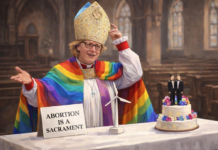


I only find 1 mention of abortion on the Rev. Jules Gomes’ sermon page on the St Augustine’s Church, Douglas, Isle of Man website and none at all on his Mixcloud collection of sermons.
You need to get a new set of spectacles. I’ve just checked and a number of sermons on abortion come up: “Sacrificing our babies to Molech: Why is Abortion Murder?” on his Mixcloud site.
Dr Gomes argues: ‘A Google search on “Keller” and “abortion” does not reveal a single sermon specifically on abortion.’ If you Google “Jules Gomes” and “abortion” you have a number of significant columns published by Gomes against abortion. If you go to his website there are over 10 pieces on abortion. Gomes and his church are one of the leading pro-life campaigners on the Isle of Man, and this is publicly well know. So don’t try your “fake news” tactics here.
You can also do a search on newspapers and radio on the Isle of Man and see Gomes and his church (with photographs) come up in a number of cases campaigning against abortion. Sadly, not so with Tim Keller.
Ah! On Mixcloud if you run his sermon page all the way down to the end you do indeed find one sermon on abortion. So I stand, sorta, corrected, kinda.
“Kinda”? You really ought not to bear false witness against someone who is so clearly sticking his neck out on a life-and-death issue. Have you read through the number of pieces Dr Gomes has written on abortion? There are other sermons including by Dave Brennan on abortion at Dr Gomes’ church. In fact, just last week Gomes spoke out on abortion at the Christian Concern conference. You can see the video on their website and on YouTube. This site does not allow links otherwise I’d have posted them. Perhaps you ought to be less disingenuous and more honest and also focus on the real issue of the genocide of the unborn.
I’m simply using the standard set by Dr. Gomes in evaluating sermon websites.
No, you are certainly not. Unless you know very little about search engines (in that case you are forgiven) you are playing a very mean trick.
1. Dr Gomes’ website and sermon archive does not have a carefully indexed and highly sophisticated search engine like Tim Keller’s church.
2. Gomes’ church’s website is amateurish. Keller’s is professional.
3. Dr Gomes’ article also has the standard of Google search. I have already demonstrated to you that using Google search you have a big number of results on Gomes’ participation in abortion, his writing on abortion and his church’s (and his own) participation in pro-life work on the Isle of Man.
Why are you deliberately choosing to ignore all this and behaving in such an obstinate manner?
My REC pastor speaks fairly often about homosexual activity, abortion, and euthanasia. Anyone attending regularly will hear about these topics. However, he seldom preaches an entire sermon about these things.
The Lutheran Church – Missouri Synod and the Anglican Church in North America have spoken strongly against the new law. The Roman Catholic Church, obviously, too.
I used to attend Redeemer and for years have found Tim Keller’s sermons and books to be insightful and edifying. That said, I am disappointed that he has not spoken out on the New York abortion bill. He is arguably the most prominent Protestant minister in the State of New York. On September 29, 2018 the New York Times published an op-ed by Tim Keller in which he said “American churches in the early 19th century that did not speak out against slavery because that was what we would now call “getting political” were actually supporting slavery by doing so. To not be political is to be political.” By Reverend Keller’s own logic then he is supporting late term abortions by not speaking out against them.
Arguably the second most high profile Protestant minister in New York, Carl Lentz of Hillsong, spoke out and called the situation with the abortion bill “evil, shameful and demonic”. In the past when pressed on The View over his views on homosexuality, he seemed to cave which made me all the more surprised to see him stand firm on abortion and give such a firm response to this bill. His church is full of hipsters too, so it’s not like speaking out carries no risk for him. Statements like his could easily alienate a good portion of his leftward-leaning flock, so I applaud his statement. I really wish Tim Keller would also speak out against this great evil happening all around him and affecting so many in his congregations. These urban mega-churches emphasize their desire to be relevant, but then are far too often silent on the most relevant topics to city-dwelling Christians.
Well said. We’re deafened by the silence from the pulpit here in the UK as well. I suppose this is because to attack abortion is to raise accusations of attacking ‘women’s rights’, and few, if any, male priests want to be accused of that. Even so – where are the women priests shouting about the abortion issue? Nowhere, it seems.
With extreme laws allowing abortion on demand until birth being proposed across the USA, there is no excuse for priests and pastors not to be very specific in opposing them; in particular, priests and pastors having national audiences need to do so.
[…] The silence of the shepherds on the abortion of the lambs – Anglican Ink © 2020 — Read on anglican.ink/2019/02/01/the-silence-of-the-shepherds-on-the-abortion-of-the-lambs/ […]
[…] https://anglican.ink/2019/02/01/the-silence-of-the-shepherds-on-the-abortion-of-the-lambs/ […]